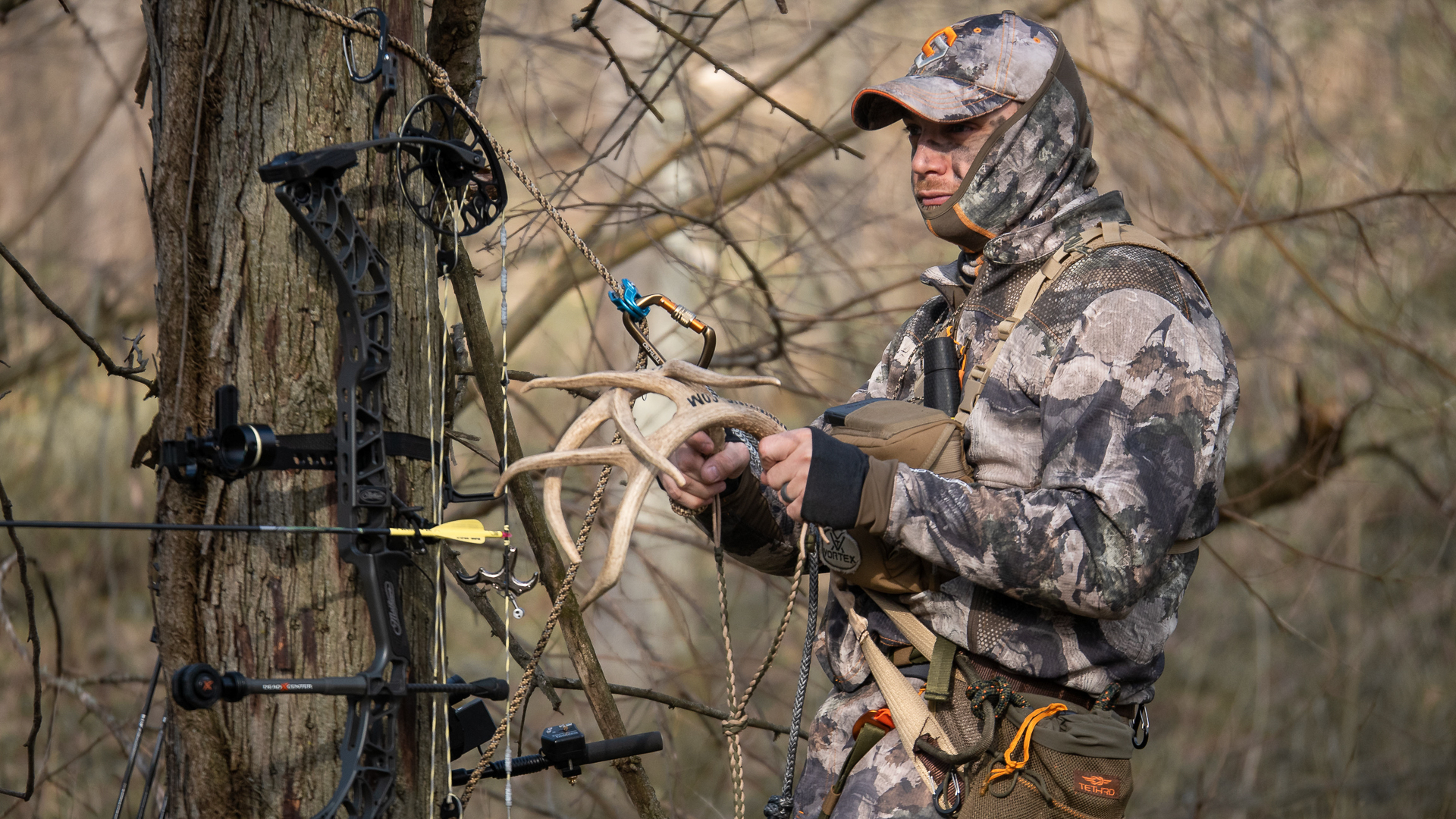
Cold calling—making deer vocalizations when you don’t see or hear a deer nearby—is a strategy that divides hunters. Some swear by it, claiming they’ve pulled in bucks they never knew existed.
Others have learned the hard way that too much calling can backfire, alerting deer or inviting trouble from the wrong kind of company. Let’s take a closer look at both sides of the story—the pros, the cons, and the balance that makes cold calling an effective tool when used wisely.
The Case for Cold Calling
Cold calling works because deer are social animals. During the rut, bucks and does alike are tuned in to sound. A grunt, bleat, or the clash of antlers can send a message that something’s happening nearby—competition, curiosity, or opportunity. And for deer within earshot, that’s often reason enough to investigate.
When you cold call every 30 minutes or so, you increase your odds of catching the attention of a deer that might otherwise pass silently just out of view. Many mature bucks move through thick cover, scent-checking, browsing, or traveling between bedding areas.
They might never step into shooting range unless something convinces them to. A few soft grunts or a light rattling sequence can be that trigger—the sound that makes them circle in to see what’s going on.
One of the best arguments for cold calling is that it works even when you don’t know deer are around. You can’t call to what you don’t know exists, but you can reach deer that are too far away to see or hear naturally.
Countless success stories start with hunters who were simply passing the time, deciding to rattle or grunt on a whim, only to have a buck show up minutes later, bristled and ready for a fight.
Calling can also make long sits more interactive. When you’re cold calling, you’re doing something proactive—trying to stir up interest, test responses, and capitalize on any deer in earshot. It’s a productive way to make the most of those slow mid-morning or mid-afternoon hours when deer movement otherwise tapers off.
Why Cold Calling Doesn’t Always Work
Of course, for every story of a buck charging in to a rattle bag, there’s another where a deer slipped in quietly, winded the setup, and disappeared. Calling can be a double-edged sword—especially when used carelessly.
The biggest problem with cold calling is that it advertises your location. Every grunt, bleat, or antler crack sends a message, and not just to the deer you want to hear it. That same sound can draw in young bucks, does, or other deer you have no intention of shooting. When that happens, you risk drawing unwanted attention—and potentially blowing your cover.
Imagine a small 6-point buck that sneaks in after your rattling sequence and hangs around your stand for an hour. He’s curious but nervous, constantly looking, listening, and sniffing. If he spots or winds you, he’s going to bolt, and the commotion he makes may alert every deer in the area. Now, the woods that once felt alive are silent—and your cold calling session has just educated the local herd.
Overcalling is another danger. Deer hear these sounds all season long, especially on pressured properties. Too much or too aggressive calling can sound unnatural, putting deer on edge. Bucks that have been around the block know what real fights and social grunts sound like. If your sequence is too perfect, too loud, or repeated too often, it can actually repel mature deer rather than attract them.
Even the timing matters. Calling when a deer is already approaching can ruin a good thing. A buck that’s curious and committed may spook when a new sound erupts suddenly from your direction. Many experienced hunters will tell you: once you see a deer that’s heading your way, put the call down and let him come on his own.
Tools of the Trade: Grunts, Bleats, and Rattling
Cold calling can be done in many ways, and each call serves a different purpose.
Grunt calls are the bread and butter of deer communication. Short, soft grunts can signal curiosity or mild aggression, while a series of tending grunts can imitate a buck following a doe. Use grunts sparingly when cold calling—start soft and increase volume only if you get no response.
Doe bleats can add realism or spark interest during the pre-rut and peak rut phases. A few plaintive bleats suggest a receptive doe in the area—something that will definitely perk the ears of cruising bucks.
Rattling is the boldest form of cold calling. It’s loud, attention-grabbing, and perfect for covering ground. Bucks can hear rattling a long way off, and during peak rut, it can be a magnet. Just remember: the louder and longer the sequence, the greater the radius of deer you’re alerting—including the ones you don’t want to meet.
Should You Cold Call?
The answer depends on where and when you’re hunting. In low-pressure areas with limited human intrusion, cold calling can be deadly effective. It’s a great way to reach deer that aren’t yet visible and to pull hidden bucks into range.
But on heavily hunted ground or in tight setups where deer can approach downwind quickly, it can be risky. A single mistake—an extra call, a bad wind, or a curious non-target deer—can ruin a hunt.
The bottom line: cold calling is a tool, not a guarantee. It’s about knowing when to speak and when to stay silent. Call every 30 minutes, keep it natural, and read the woods. Sometimes the quiet woods are just waiting for a little noise—but sometimes silence really is golden.
When done right, cold calling can turn an empty woods into a stage—and you might just be surprised who decides to show up for the show.